

Italy recently conducted a field trial of a 5G Standalone (5G SA) network in a maritime environment to study how the technology performs in mission-critical communication scenarios. The test was carried out in the Gulf of Taranto, where naval units operated under real training conditions during day and night. The objective of the experiment was to verify whether a fully independent 5G core network could support secure communication, data exchange, and video transmission between vessels operating in open sea conditions. So, now let us see Can 5G Standalone Networks Maintain Reliable Connectivity for Maritime Operations along with Accurate LTE RF drive test tools in telecom & Cellular RF drive test equipment and Accurate Wireless Survey Software Tools & Wifi site survey software tools in detail.
Unlike early 5G deployments that depend on 4G infrastructure, 5G Standalone networks use a dedicated 5G core. This architecture allows advanced capabilities such as ultra-low latency communication, network slicing, and improved security mechanisms. These features are necessary for applications that require stable connectivity and predictable network behavior. The maritime trial in Italy provided a practical environment to validate how such features perform outside traditional terrestrial cellular networks.
Trial Architecture and Network Setup
The network used in the trial was a self-contained end-to-end 5G SA system installed directly on naval vessels. The main node of the network was deployed on an amphibious landing ship that acted as the central communication platform. The deployment included a compact 5G core network and a radio access system equipped with Massive MIMO antennas to provide wireless coverage across the surrounding operational area.
A second naval vessel was equipped with 5G customer premises equipment (CPE). This device connected onboard systems to the wireless network created by the lead ship. With this configuration, the two vessels formed a mobile private network that did not rely on satellite links or coastal infrastructure. The network operated as a closed system designed specifically for mission-critical communication and operational testing.

The architecture allowed the research team to evaluate several parameters, including signal stability, throughput, latency, and connection reliability between moving platforms. Because the vessels operated in open sea conditions, the network experienced changing propagation environments caused by distance, waves, and movement. These conditions provided useful data on how 5G radio signals behave in maritime environments.
Data Transmission and Network Performance
During the experiment, the network supported multiple types of communication traffic. Data transmitted between the vessels included command system information, operational status updates, and high-resolution video feeds from unmanned systems deployed during the training exercise. The system processed video streams from twelve unmanned platforms, allowing operators to monitor activities in real time through the network connection.
The trial also used encrypted communication channels to maintain secure data exchange between the ships. This approach allowed the network to transport both classified and non-classified information without exposing the system to unauthorized access. The encryption layer worked together with the 5G core network functions to maintain secure communication sessions across the wireless link.
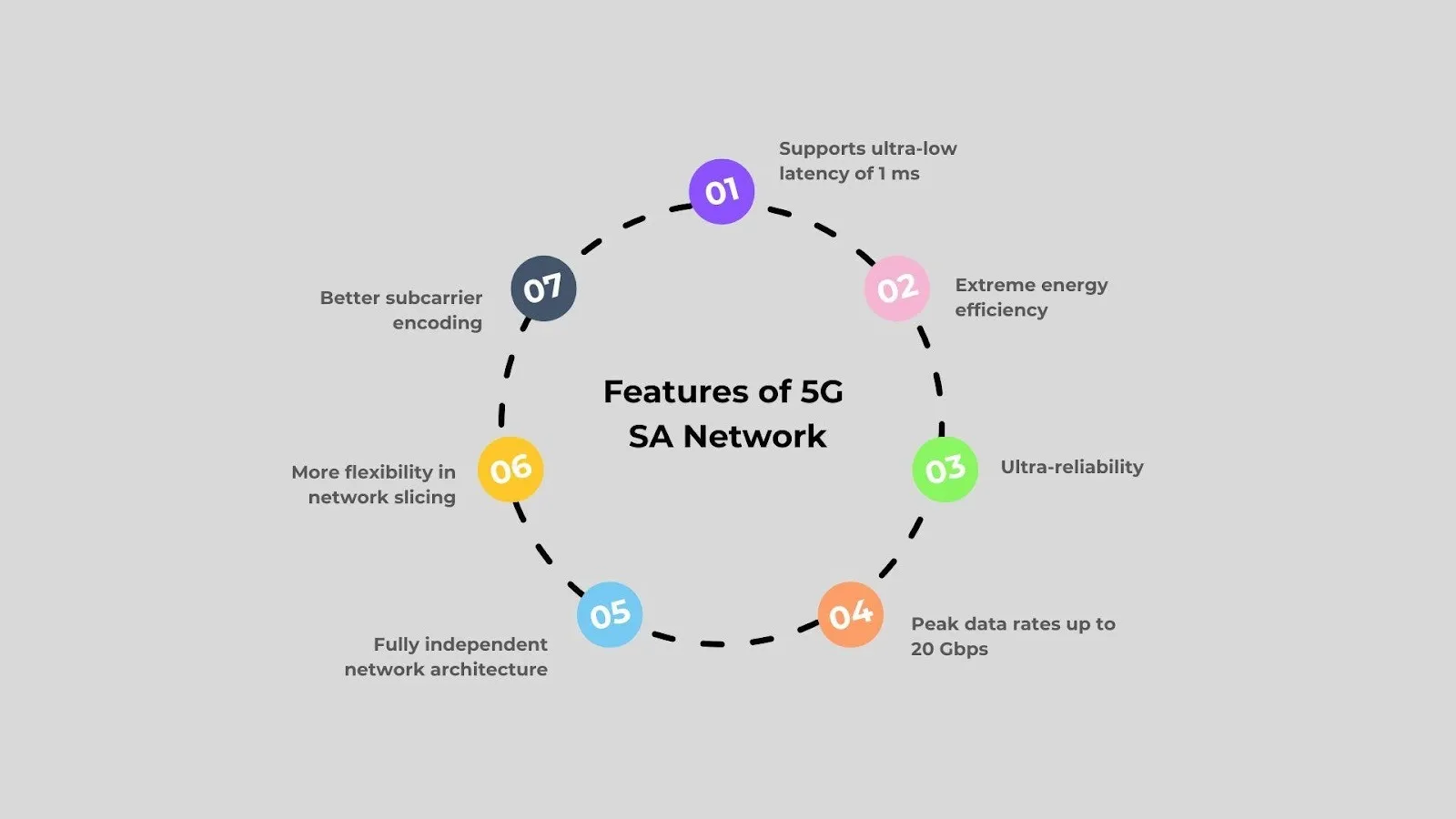
Performance evaluation during the experiment showed that the 5G SA network maintained stable connectivity while supporting multiple simultaneous data streams. Engineers monitored radio parameters, packet delivery performance, and latency behavior during both daytime and nighttime operations. The collected data helped validate the reliability of 5G SA communication in operational conditions.
Spectrum Efficiency and Network Consolidation
Another objective of the trial was to examine how a unified 5G network can replace multiple specialized communication systems. Naval platforms often operate with different radio technologies that serve separate functions such as telemetry, command data, and video transmission. Running several independent systems can create spectrum conflicts and interference.
The experiment showed that a single 5G SA infrastructure can transport many types of traffic using one coordinated radio system. This reduces the need for multiple communication channels operating in overlapping frequency bands. By consolidating services into one network, operators can improve spectrum utilization and reduce interference risks.
Implications for Private 5G Networks
The Italian trial also demonstrates how private 5G networks can be deployed in environments where traditional telecom infrastructure is unavailable. Unlike public mobile networks designed for consumer coverage, private 5G systems are configured to support specific operational requirements such as secure communication, deterministic performance, and local network control.
Maritime operations represent one example of this use case. Similar deployments are expected in sectors such as industrial automation, ports, mining sites, and large manufacturing facilities. In these environments, a localized 5G SA network can support sensors, video monitoring systems, autonomous vehicles, and real-time control applications.
The results from the Italian experiment show that 5G Standalone networks can operate effectively even in challenging environments where connectivity must remain stable despite movement and changing radio conditions.
Conclusion
The 5G Standalone maritime trial conducted in Italy provided practical insights into the behavior of next-generation mobile networks in mission-critical scenarios. By deploying a self-contained 5G SA system directly on naval vessels, engineers demonstrated secure communication, real-time data exchange, and reliable video transmission between moving platforms.
The experiment confirms that 5G SA architecture can support specialized communication environments that require secure, low-latency, and high-capacity connectivity. These results strengthen the role of private 5G networks in sectors where dependable wireless infrastructure is necessary for operational efficiency and safety.
About RantCell
RantCell is a smartphone-based mobile network testing and analytics solution designed for telecom operators, regulators, and enterprises. It supports drive testing, indoor walk testing, QoE measurements, and automated reporting for 2G, 3G, 4G, 5G, and Wi-Fi networks. The platform collects RF and service KPIs using Android devices and visualizes results through a cloud-based dashboard. Also read similar articles from here.